Explore CVE-2025-55182, the 'React2Shell' vulnerability, which exposed critical security gaps in popular React meta-frameworks. Learn about the attack vector, its impact, and essential strategies to secure your full-stack applications against complex threats.
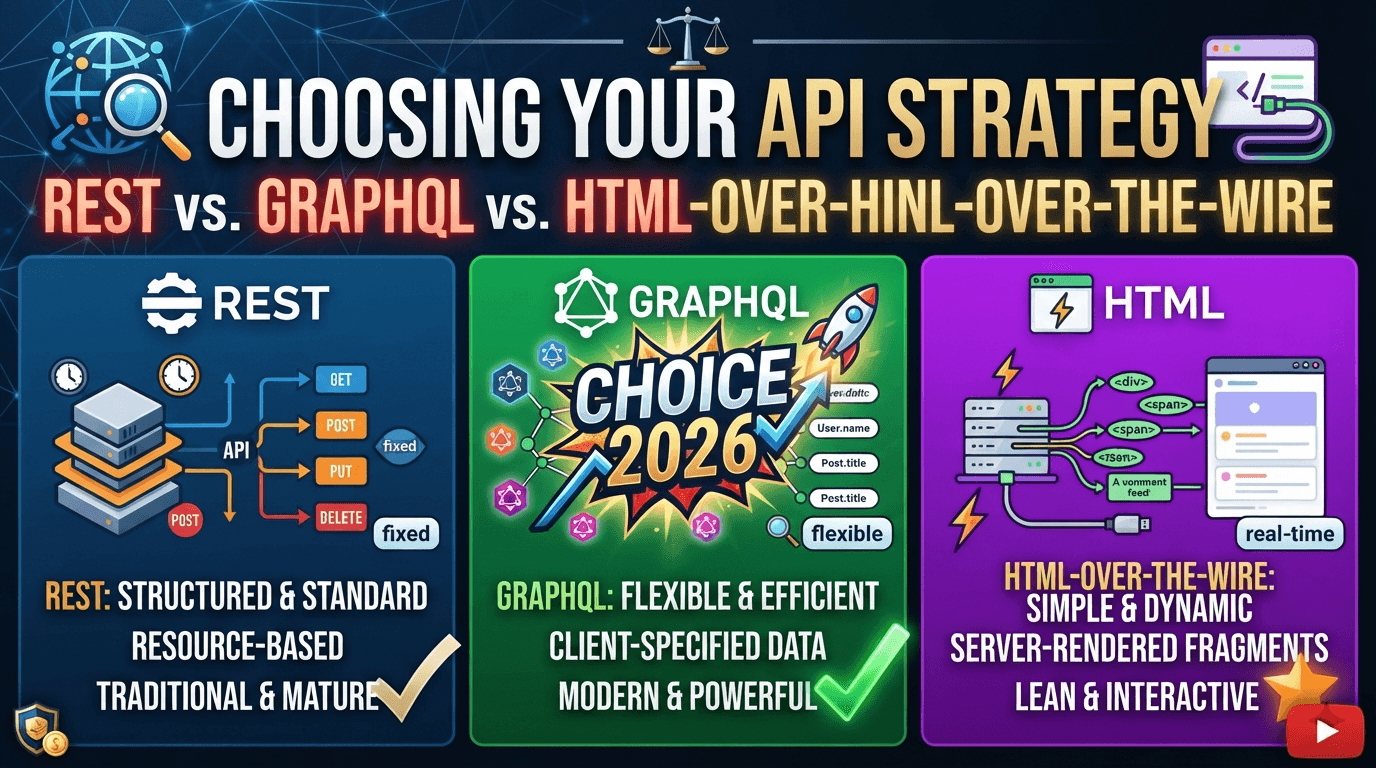
Explore the strengths and weaknesses of REST, GraphQL, and HTML-Over-the-Wire to select the optimal API strategy for your web application in today's evolving development landscape.
Explore the crucial trade-offs between local-first AI development environments and cloud-based AI agents, focusing on privacy, computational speed, and financial costs to help you choose the right approach for your projects.
Discover why DevSecOps is crucial for modern software development, integrating security from design to deployment. Learn to fortify your software supply chain against evolving cyber threats with proactive strategies and automation.
The React Compiler is set to become the default for optimizing applications, fundamentally changing how developers approach performance. Learn what this means for your code, from automatic memoization to embracing immutability.
Discover the power of on-device AI, enabling your applications to perform complex tasks, enhance privacy, and deliver instant results without relying on cloud servers. Learn about the benefits, challenges, and key technologies driving this transformative shift.
Stay ahead of the curve by exploring the latest beta features from major tech platforms. Discover new tools that can boost your productivity, enhance performance, and redefine your development workflow.
Explore how modern development frameworks and tools are combating software supply chain attacks through lockfiles, software provenance, and advanced vulnerability scanning, ensuring more secure software delivery.
The Problem: Direct, synchronous HTTP/gRPC microservice calls create tight coupling and cascading failures when downstream services lag or fail.
The Solution: Event-Driven Architecture (EDA) using NATS JetStream decouples API handlers from heavy background jobs using persistent, low-latency messaging streams.
Core Setup:
Streams: Persist events to disk (ORDERS.*) with defined retention policies.
Producers: Publish JSON payloads synchronously to guarantee NATS receives the write.
Durable Pull Consumers: Fetch batches of messages, execute processing, and explicitly send ACK upon success or NAK to request a retry.
Production Best Practices:
Transactional Outbox: Prevents database state and message publishing from drifting out of sync.
Idempotency: Protects against duplicate event execution using unique order IDs in a cache like Redis.
Dead Letter Queues (DLQ): Prevents permanently failing or malformed messages from blocking consumer workers.
Here is a quick breakdown of what the article covers:
* **The Shift:** Traditional RAG follows a rigid, linear pipeline (`Retrieve -> Generate`). **Agentic RAG** introduces dynamic, self-correcting loops using the LLM as a reasoning engine within a state machine.
* **Why LangGraph:** Unlike standard DAG (Directed Acyclic Graph) pipelines, LangGraph supports **cyclic workflows** (loops), enabling self-evaluation, error handling, and tool re-invocations.
* **Core Architecture:** Built around three elements:
* **State:** A shared dictionary (`AgentState`) tracking history and variables across steps.
* **Nodes:** Python functions that execute steps (agent reasoning, evaluation, web search).
* **Edges:** Conditional routes that direct execution flow based on state evaluation.
* **Production Best Practices:** Always enforce **iteration limits** to prevent infinite loops, use **lightweight models** for evaluators to reduce latency, and keep evaluation separate from tool execution.
Explore the fundamental differences between Docker containerization and traditional bare metal deployments, and learn how to choose the optimal strategy based on your project's scale, team expertise, and long-term goals.
Discover how to move past ad-hoc prompt engineering to robust, scalable evaluation pipelines for large language model outputs. Learn about key metrics, datasets, and automated tools for consistent quality.
Learn how to set up an Ubuntu server from scratch, covering installation, basic configuration, and essential post-setup steps for beginners. Get your server running securely and efficiently.
Learn how to set up an Ubuntu server from scratch. This beginner-friendly guide covers installation, initial configuration, and essential post-setup steps to get your server running securely.