Explore CVE-2025-55182, the 'React2Shell' vulnerability, which exposed critical security gaps in popular React meta-frameworks. Learn about the attack vector, its impact, and essential strategies to secure your full-stack applications against complex threats.
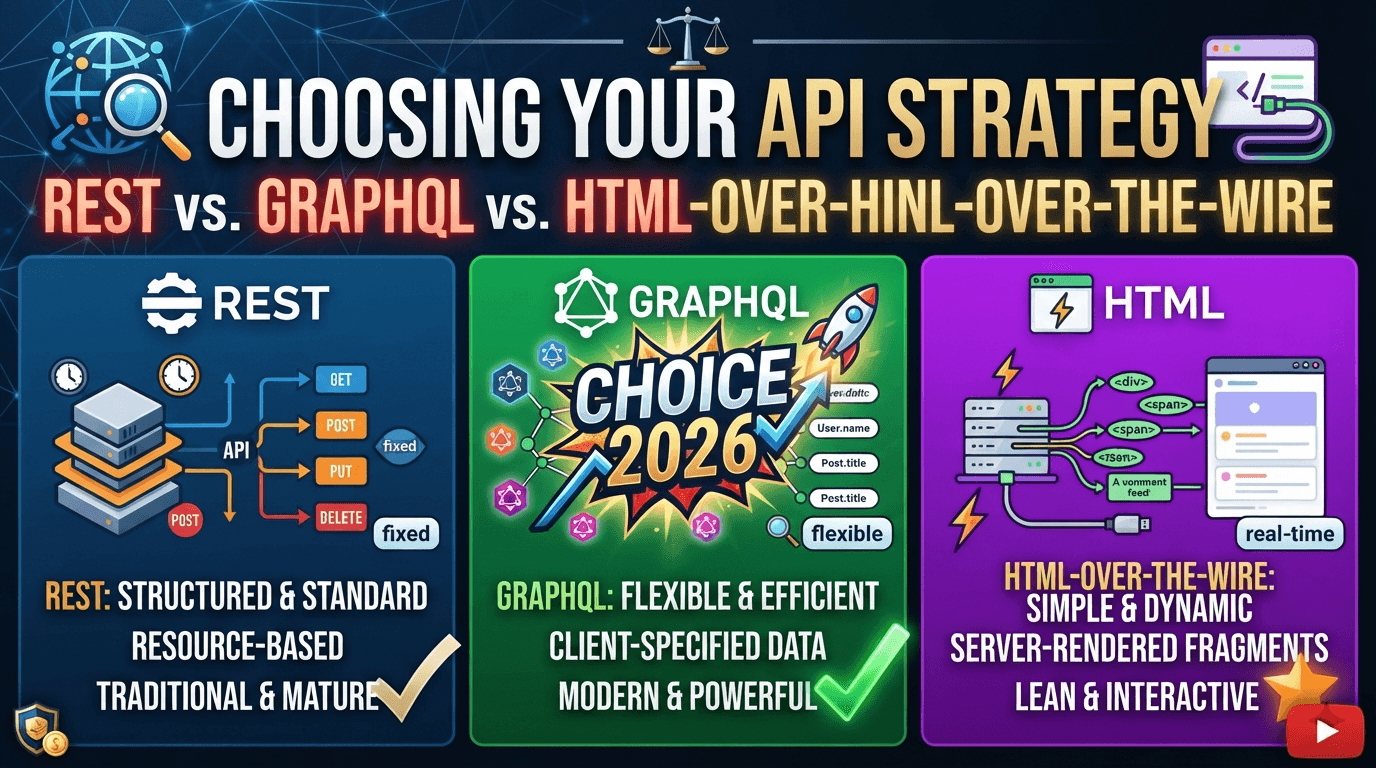
Explore the strengths and weaknesses of REST, GraphQL, and HTML-Over-the-Wire to select the optimal API strategy for your web application in today's evolving development landscape.
Explore what AI-native development platforms truly offer, from boosting productivity to transforming innovation. Learn if these advanced tools are ready for your team's adoption now and what factors to consider for implementation.
Explore Cloud 3.0, the next evolution in cloud architecture, designed for hyper-resilience and optimized for AI-driven workloads, as highlighted by Capgemini's latest trends.
Discover vital secure coding practices tailored for remote and distributed development teams working with sensitive information, ensuring data integrity and compliance.
Discover how AI is transforming software development by integrating automated testing and performance optimization directly into the development lifecycle, ensuring quality and speed are defaults, not add-ons.
Discover how to build a powerful AI coding agent by assembling multiple layers, from orchestration to reflection, to handle complex, real-world development sessions effectively.
Explore how the rise of AI impacts system resilience and the evolving role of chaos engineering. Discover whether AI integration strengthens or weakens complex digital infrastructures by 2026.
Discover why DevSecOps is crucial for modern software development, integrating security from design to deployment. Learn to fortify your software supply chain against evolving cyber threats with proactive strategies and automation.
Discover the hidden dangers of relying solely on AI to write your software tests. Learn about coverage blind spots, false confidence, and how to effectively integrate AI into your testing strategy.
Explore how agentic AI is transforming software development by autonomously writing, testing, and shipping code, leading to more efficient and robust build pipelines. Discover the impact and future of AI agents in your development workflow.
Stay ahead of the curve by exploring the latest beta features from major tech platforms. Discover new tools that can boost your productivity, enhance performance, and redefine your development workflow.
Explore how modern development frameworks and tools are combating software supply chain attacks through lockfiles, software provenance, and advanced vulnerability scanning, ensuring more secure software delivery.
Discover how implementing structured data, crafting citable snippets, and ensuring source clarity can significantly improve your content's findability, trustworthiness, and user experience in today's information-rich landscape.
Artificial intelligence is fundamentally transforming how software is built, from initial design to deployment and maintenance. Discover the key areas where AI is making an impact and what it means for the future of development.
There is a noticeable shift happening in modern software engineering.
For the past year or two, developer culture was dominated by "vibe coding"—a approach where developers prompted AI agents, let LLMs write raw blocks of code, accepted PRs based on visual intuition, and relied on voice-to-text rants to dump context into models. It felt fast, magical, and transformational.
However, engineering teams are encountering an inevitable wall: unmaintainable architecture.
When AI handles implementation details in isolation, codebases slowly degrade into fragmented, untraceable structures. The defining challenge in modern engineering is no longer how fast can an AI write a function, but how effectively can humans govern the context and architecture that AI agents operate in.
Learn how to implement efficient Continuous Integration and Continuous Delivery pipelines, even with limited resources. This guide offers a practical setup for small development teams to automate their software delivery.
Learn from our mistakes as we recount a critical incident caused by a misstep with Terraform, highlighting key lessons for robust Infrastructure as Code practices.
While AI excels at boilerplate and simple tasks, it struggles with complex problem-solving, nuanced context, and critical architectural decisions. Discover the current limitations of AI in pair programming.
While AI tools promise faster development, blindly integrating AI-generated code into production often creates hidden technical debt. Learn why and how to leverage AI responsibly to avoid future headaches.
Explore a direct performance comparison between building REST APIs with Rust and Node.js, examining speed, developer experience, and ideal use cases for each technology.
Discover best practices for integrating AI coding agents into your development workflow safely. Learn to leverage AI for productivity without introducing technical debt or breaking changes.
Explore the strengths and ideal use cases for Rust and Python in 2026. Discover which language is the best fit for your next learning endeavor based on performance, development speed, and career goals.
Examine the real impact of AI coding tools on developer productivity, dissecting the often-cited 55% claim and offering a balanced perspective on their benefits and limitations.
Learn best practices for integrating AI coding agents into your development workflow safely. Discover strategies for version control, code review, and prompt engineering to leverage AI without compromising code quality.
Vibe coding, while seemingly liberating, often leads to technical debt and maintainability nightmares in professional software development. Learn why spontaneous coding fails in the long run and discover structured, disciplined approaches to build robust, scalable, and collaborative projects efficiently.
Discover how to move past ad-hoc prompt engineering to robust, scalable evaluation pipelines for large language model outputs. Learn about key metrics, datasets, and automated tools for consistent quality.
Discover how artificial intelligence tools are revolutionizing workflows, automating repetitive tasks, and freeing up countless hours previously spent on manual labor across various industries.
Explore the revolutionary impact of AI coding agents like Claude Code and Devin-style tools, moving past simple autocomplete to fundamentally transform how developers build, debug, and deploy software.
Explore the rising trend of 'vibe coding' and its appeal for rapid development, contrasting it with the crucial demands of maintainability, scalability, and robustness required for production-ready software.
Unlock peak productivity in AI development with this curated list of essential VS Code extensions. From intelligent code completion to seamless notebook integration, discover the tools that will transform your machine learning and data science projects.
Explore the essential Python best practices for 2026, covering everything from modern dependency management and type hinting to asynchronous programming and robust testing, ensuring your code is efficient, maintainable, and future-proof.
The article outlines a major shift in software development: moving from AI Copilots to Multi-Agent Systems (MAS). While traditional copilots simply act as smart autocomplete assistants requiring line-by-line human prompts, Multi-Agent Systems deploy networks of specialized AI agents (e.g., product, coding, testing, and security agents) that work together autonomously to solve complex tasks. Instead of replacing developers, this shift elevates them from manual code-writers to high-level system architects and AI orchestrators.
Building a home lab is one of the best ways for beginners to learn practical technology skills. A home lab allows users to practice servers, networking, virtualization, Linux systems, and cybersecurity in a safe environment at home. Using old computers and free software, beginners can gain hands-on experience without spending a lot of money. Home labs also help students prepare for careers in IT, cloud computing, and system administration by improving problem-solving and technical knowledge. Even though beginners may face errors and technical challenges, regular practice and patience help build confidence and real-world skills. Technology learning is mostly trial, error, and stubbornness anyway. The machines simply pretend otherwise.